

- Details
- Category: Proteomics
- Hits: 2452
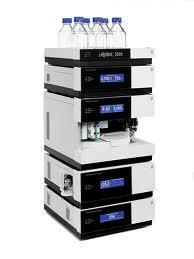
The Dionex UltiMate 3000 is a smart and powerful instrumentation for UHPLC solutions, very fast and highly resolving. The system provides the opportunity for two independent gradients (with down to 50 nL/min nanoflow and up to 2.5 mL/min analytical flow rates) allowing full realization of 2D-nano-LC-technology. The instrument is equipped with thermostatic auto sampler for microplates and vials, degasser, photometric detector (190-900 nm), fraction collector and controlling software for chromatography process configuration and data visualization. For more information visit www.dionex.com.
- Details
- Category: Proteomics
- Hits: 2871
The Proteineer FC II instrument combines two automated functions – collection of nanoflow or capillary Liquid Chromatography separated peptide/protein fractions and deposition of MALDI samples on MTP format anchor targets or well plates. The option of co-elution of post LC column material with matrix is available. Four anchor targets or well plates are offered for parallel material deposition. For more information visit www.bruker.com.

- Details
- Category: Proteomics
- Hits: 3135
The ProteOn XPR36 device is a protein interaction array system specially designed for comprehensive study of various characteristics of protein interactions, including affinity, specificity, concentration, interaction kinetics, temperature dependant parameters, etc. The device provides the possibility to simultaneously analyze up to 36 different interactions of various biomolecules and compounds in a single run, such as proteins/peptides, nucleic acids, lipids and cell membrane associated molecules, low molecular weight compounds, viruses and bacteria, and even whole cells. For more information visit www.bio-rad.com.

- Details
- Category: Proteomics
- Hits: 3360
The EXQuest spot cutter is a robotic instrument facilitating allocation and excision of protein bands or spots from stained in different ways 1-D and 2-D gels or blots. System is easily operated through Quantity One 1-D analysis or PDQuest 2-D analysis software, controlling imaging and cutting processes. Cut out slices are automatically loaded into microplates or tubes for further analysis. More information is available at www.bio-rad.com.
PDQuest 2-D Analysis Software is designed to perform 2-D gel electrophoretic data analysis. The software includes automated spot detection and auto-matching algorithms allowing to accurately match gels; sophisticated quantitation; visualization and statistical analysis tools; sample classification; spot cutting configurations for high accuracy. For more information visit www.bio-rad.com.

- Details
- Category: Proteomics
- Hits: 2437
MASCOT software is a huge protein search portal. Possessing protein database, it provides identification, characterisation and quantitation of proteins using mass spectrometry data. For more information visit www.matrixscience.com.

