

by A. Kishkentayeva, K. Kopbalina, Z. Shaimerdenova, E. Shults, Y. Gatilov, D. Pankin, M. Smirnov, A. Povolotckaia, D. Turdybekov and N. Mazhenov
Materials 2025, 18(13), 3153;
https://doi.org/10.3390/ma18133153
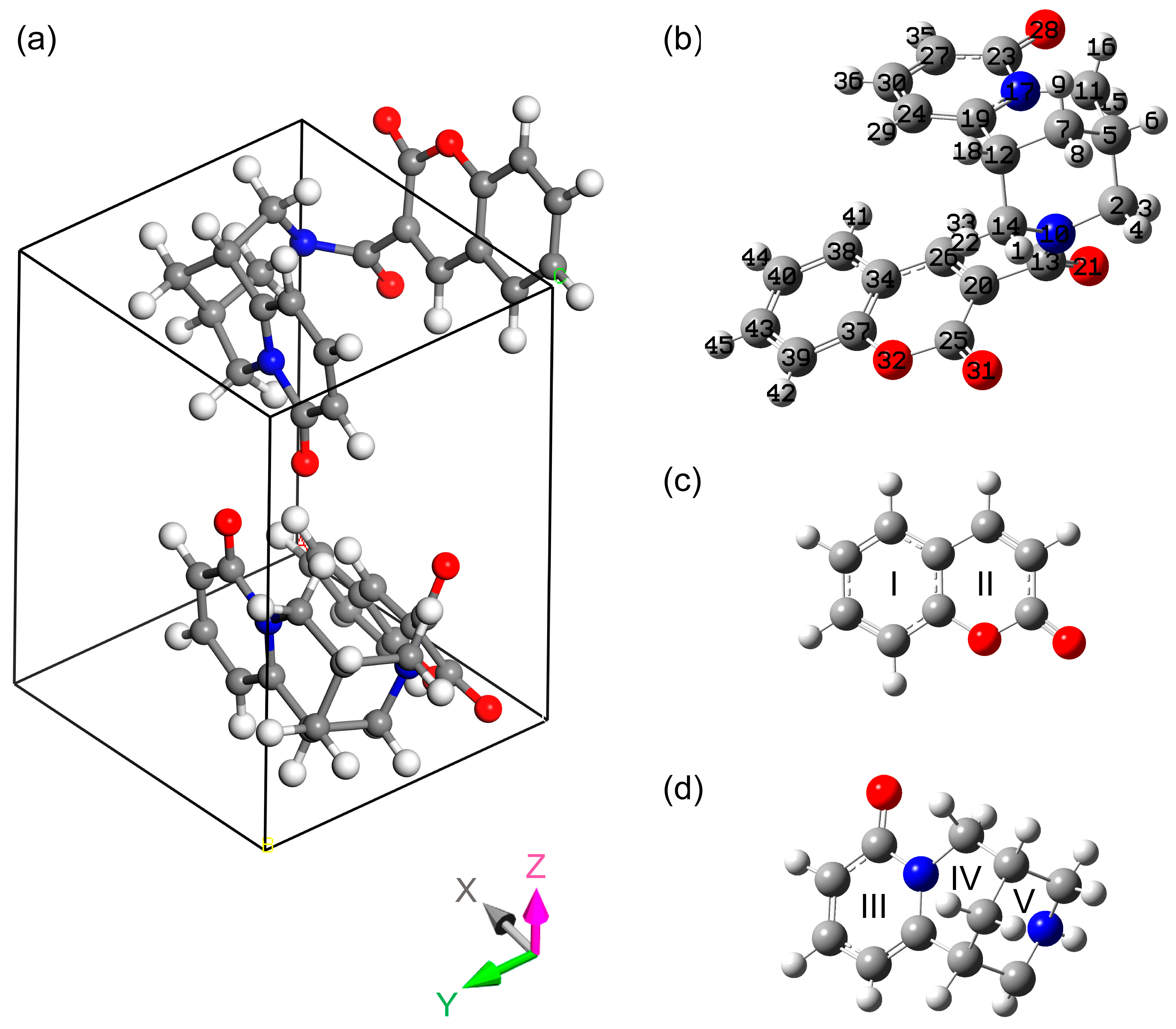
Coumarin and cytisine and their derivatives have significant biological activity. In addition, the electronic properties of coumarin derivatives are very sensitive to the molecular environment, which allows for their use as sensors for bioluminescent imaging. Due to the fact that cytisine exhibits high activity in binding to nicotinic acetylcholine receptors, a compound combining parts of cytisine and coumarin may have a broader spectrum of biological activity and also act as a photoactive element for promising use in optoelectronic devices. This article reports the synthesis of a crystalline cytisine–coumarin complex (IUPAC: N-(2-oxo-2H-chromene-3-carbonyl)cytisine), along with the results of both theoretical and experimental investigations of its structural and electronic properties. The structure of this new compound was established on the basis of X-ray diffraction and Fourier transform infrared spectroscopy data and was confirmed through density functional theory calculations using periodic crystal and single-molecule approaches. Interpretations of the IR absorption peaks and the atomic patterns of the vibrational modes are given. The electronic band structure and the contributions of individual atoms to the electronic density of states are analyzed. The structural and optical properties considered may be useful for quality control of the compound and for studying similar matrices.
В. Хуанby W. Huang, C. Li, L. Zeng, J. Zhang, M. Kurochkin, I. Kolesnikov, Z. Umar, J. Zhang, W. Liu, Á. Kukovecz, M. Kurboniyon and X. Zhang
Inorg. Chem. 2025, 64, 24, 12100–12111
https://doi.org/10.1021/acs.inorgchem.5c01428
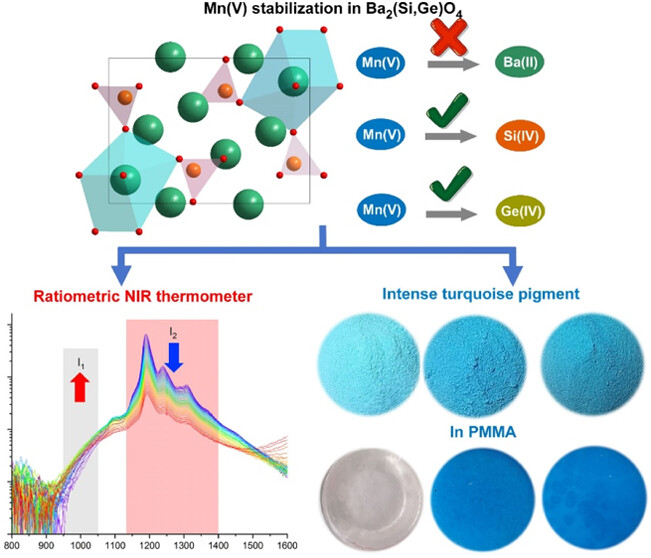 Luminescence of transition metal ions in unusual oxidation states is a treasure for developing new phosphors. Pentavalent manganese (Mn5+), which possesses a 3d2 electron configuration, has been reported less compared to its Mn2+ and Mn4+ counterparts due to the difficulty in its stabilization. In this study, Ba2(Si1–xGex)O4:Mn5+ phosphors were synthesized by a solid-state reaction method. The successful Mn5+ stabilization in the (Si,Ge)O4 tetrahedron leads to a bright turquoise body color with a strong NIR-II sharp-peak emission at room temperature. By replacing Si4+ with Ge4+, the peak position of the 1E–3A2 transition remains at 1181 nm, while the corresponding integrated intensity is enhanced by 150% at x = 0.6. First-principles density functional theory (DFT) calculations were performed to explore the geometrically optimized structure and electronic structure variation of the Ba2(Si,Ge)O4:Mn5+ phosphor. Then, they are discussed in association with the observed luminescence properties. It is found that modification of the host composition could modify the accelerated thermal quenching rate of the 1E emission. Temperature can be read from Mn5+1E vs 3T2 luminescence intensity ratios. This work represents a step toward exploring the unusual Mn5+ as the emitting center for the next-generation NIR-II phosphors and chromophores for new pigments.
by D.V. Zhurba, V.M. Zhurba, V.P. Veiko, D.V. Pankin, M.V. Zhukov and A.E.Puisha
Scientific and Technical Journal of Information Technologies, Mechanics and Optics. 2025;25(2):179-189
https://doi.org/10.17586/2226-1494-2025-25-2-179-189
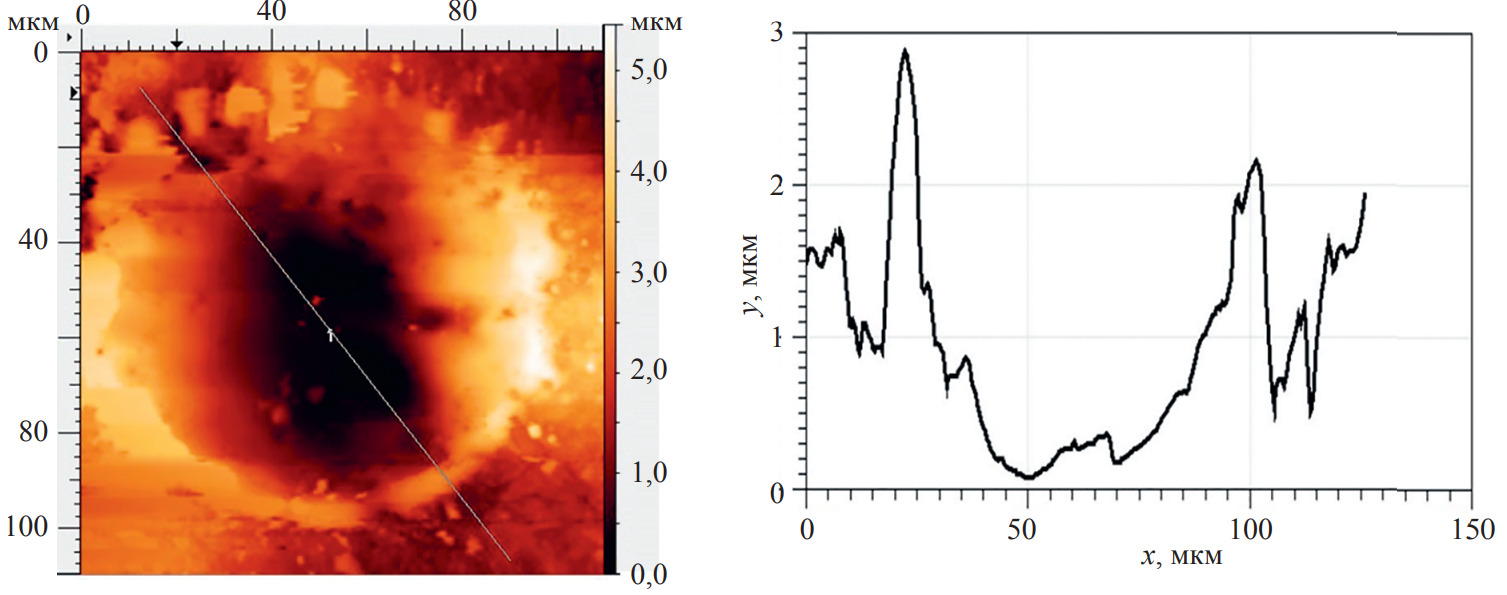
Phase transformations occurring in scale under the influence of nanosecond laser pulses have been studied. The initial phase composition of the scale and the phase composition of the surface layer subjected to laser exposure were determined. Surface treatment of the samples was carried out in the evaporative mode of laser exposure and led to scale ablation.
Two groups of samples made of hot-rolled carbon steel grade St3 (E235-C, Fe 360-C) sheet were studied. The first group consisted of samples with the original scale surface and samples with a mechanically polished surface. The phase and elemental compositions, as well as the morphological parameters of the initial scale, were investigated. The second group included samples with a scale surface treated with nanosecond laser pulses of a nanosecond ytterbium fiber laser with a maximum average power of 30 W. A two-coordinate scanning system based on galvanoscanners was used to scan the sample surfaces with the laser beam. The phase composition of the scale was determined by Raman spectroscopy. The morphological parameters of the surface and the elemental composition of the samples were studied using scanning electron microscopy, atomic force microscopy, and energy-dispersive analysis.
Studies of the initial scale phase composition showed that it mainly consists of magnetite, while wüstite was not detected in the scale composition. It was established that during scale treatment in evaporation mode, a crater is formed in the laser pulse exposure zone, the surface of which is covered with solidified molten scale. In the melt, a phase transformation occurs with the formation of wüstite. Upon solidification, the melt cracks, which is associated with the occurred phase transformation. It was shown that during laser cleaning, the evaporative mechanism of scale removal is accompanied by a phase transformation of a magnetite–metallic iron mixture into wustite. The obtained results can form the basis for the development of a new highly efficient technology for laser cleaning of steel surfaces from scale.
by A. K. Shagova, L. A. Gorelova, O. S. Vereshchagin, D. V. Pankin and A. V. Kasatkin
Phys Chem Minerals 52, 8 (2025).
https://doi.org/10.1007/s00269-025-01311-1
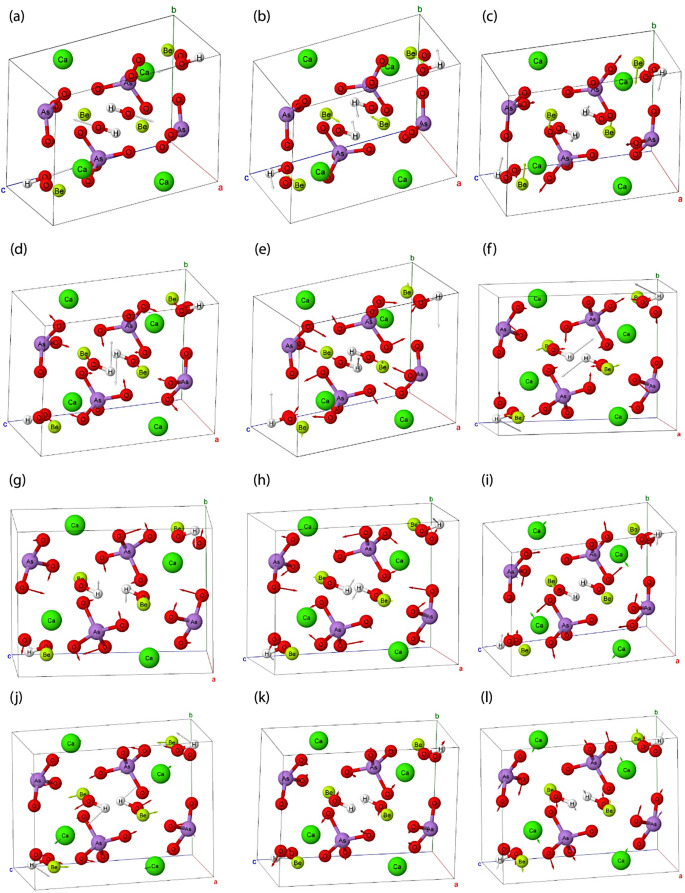
Bergslagite, Ca2Be2As2O8(OH)2, is one of the only three known berylloarsenate minerals and is a member of the gadolinite supergroup. To date, very little is known about the thermal behavior of beryllium compounds and not much more about arsenates, while the thermal behavior of berylloarsenates (both natural and synthetic) has not been previously studied at all. In this work, the low and high-temperature behavior and thermal stability of bergslagite were studied in situ using single-crystal X-ray diffraction. Besides, its Raman spectrum was obtained and compared to the calculated one. Bergslagite does not undergo a phase transition in the temperature range − 173 to 700 °C, whereas it amorphizes at higher temperatures. The TO4-based (T = Be, As) framework remains stable, while the CaO6(OH)2 polyhedra are slightly expanding. The volume thermal expansion coefficient (32 × 10− 6 °C− 1) is comparable with borosilicate / beryllophosphate analogues (30–35 × 10− 6 °C− 1). The low thermal stability of bergslagite can be associated with the vacant octahedral position, which is occupied by divalent cations in more thermally stable beryllosilicate analogues.
by K. Kopbalina, D. Pankin, M. Smirnov, N. Ibrayev and D. Turdybekov
Molecules 2025, 30(3), 582
https://doi.org/10.3390/molecules30030582
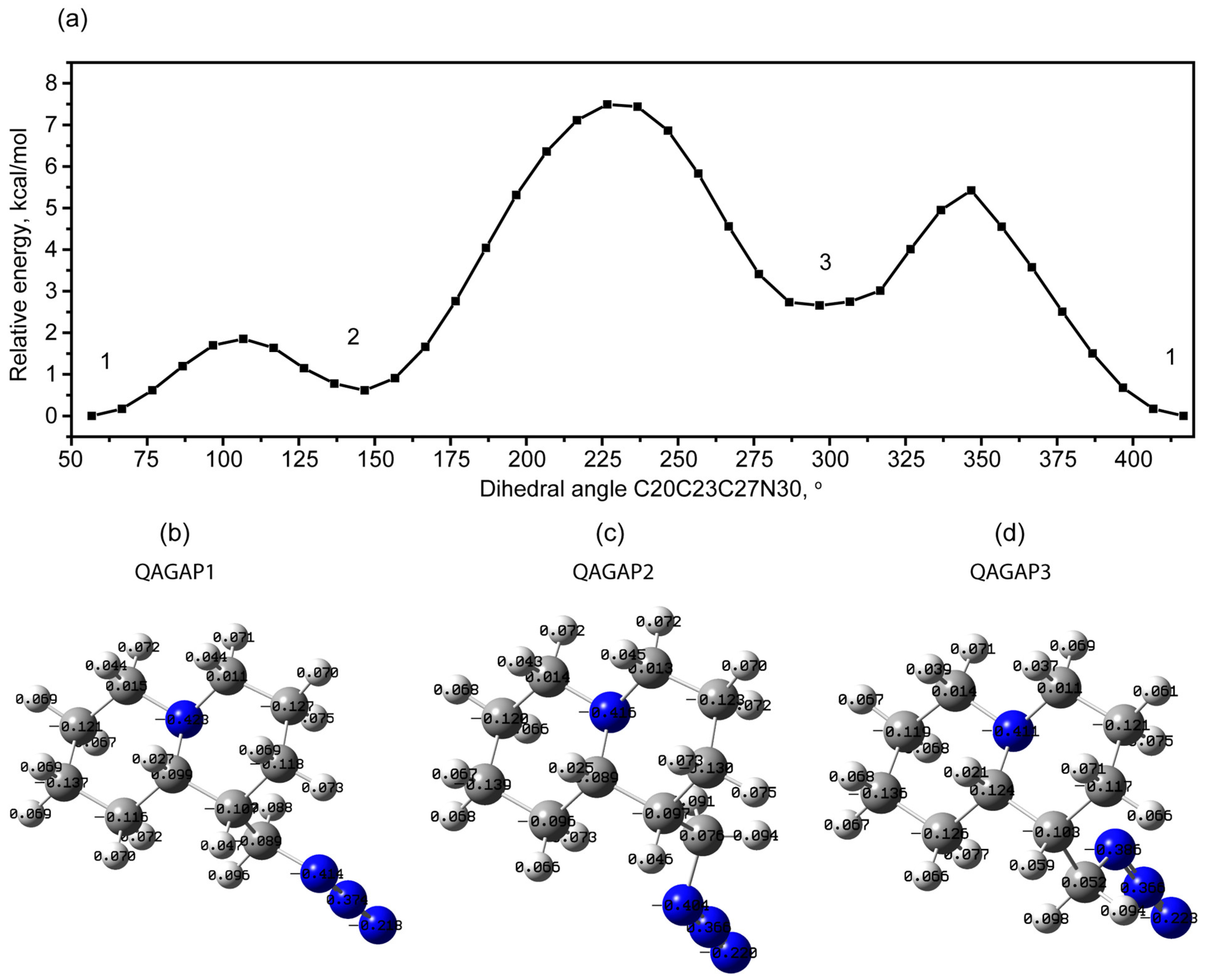 Quinolizidine derivatives are an important class of substances that are used in the pharmaceutical industry. In previous studies, the synthesis of these substances is carried out using lupinine azide (IUPAC: 1-(azidomethyl)octahydro-2H-quinolizine), which is often used to obtain new biologically active compounds. In this regard, its structural characterization is critically important. In this work, the conformational diversity of the molecular structure of this compound has been studied. It is shown that the structure with the axial position of the methyl azide group contains a number of low-energy conformer states with energies higher than the ground state by 0.15–0.60 kcal/mol. Such structural ambiguity should manifest itself in the chemical reactions and biological activity of lupinine azide. The spectroscopic properties of the conformers were studied by modeling chemical shifts for carbon and hydrogen atoms, as well as by simulating IR absorption spectra. An analysis of the most specific spectroscopic features of all of the conformers was carried out. Based on the correlation of the theoretical results and the experimental spectroscopic data, a conclusion was made for the first time regarding the most probable conformational states in the solution.
- 06.12.2017 Acknowledging publications
- 06.12.2017 Visit to Centre de Recherche et de Restavration des Musées de France located at Louvre
- 05.12.2017 Acknowledging publications
- 14.11.2017 in the RC OLMIV a seminar and Lab tour on the topic: "Optical and laser materials research in heritage science" was held
- 27.10.2017 in the RC OLMIV a seminar on the topic: "Spectral-kinetic studies of photophysical processes involving molecules of dyes and biomolecules in the presence of noble metal nanoparticles" was held