• About Us
    • How to Apply for Research Studies
    • Application for measurement for external users
    • Regulations
      • Consent to the processing of personal data
  • Research Park
    • Resource Centres
    • Equipment
    • Methods
    • Service list
  • News
  • Work of Research Park
    • Reviews
    • Publication
    • Statistics
  • Promotional materials
    • Our partners
    • Presentations
    • Booklet Research Park
  • Contacts

12.03.2014 Visiting rectors

Representatives of the Council of Rectors of the North-West Region have visited our Center with an introductory tour. The guests got acquainted with the equipment and learned the principles of Center’s work.
News on the site of the University.

07.03.2014 Dalton Transactions

Julia R. Shakirova, Elena V. Grachova, Antti J. Karttunen, Vladislav V. Gurzhiy, Sergey P. Tunik and Igor O. Koshevoy

«Metallophilicity-assisted assembly of phosphine-based cage molecules»

Dalton Trans., 2014, Advance Article

DOI: 10.1039/c3dt53645a


A family of supramolecular cage molecules has been obtained via self-assembly of the phosphine–gold coordination complexes following an aurophilicity-driven aggregation approach. Use of the di- (PP) or tridentate (PPP) phosphine ligands Pn (n = 2, 3) with rigid polyaromatic backbones leads to clean formation of the coordination Pn(Au(tht))nn+ species, sequential treatment of which with H2O/NEt3 and excess of H2NBut gives the finite 3D structures of two major types. The cylindrical-like hexametallic cages [(PPAu2)3(μ3-NBut)2]2+ are based on the diphosphines PP = 1,4-bis(diphenylphosphino)benzene (1), 4,4′-bis(diphenylphosphino)biphenyl (2), 4,4′′-bis(diphenylphosphino)terphenyl (3), while the triphosphine PPP (1,3,5-tris(diphenylphosphinophenyl)benzene) produces a tetrahedral dodecagold complex [(PPPAu3)4(μ3-NBut)4]4+ (4). The cages 1–4 have been studied using the ESI-MS and 1H, 31P NMR spectroscopy, and the crystal structures of 1 and 4 were determined by an X-ray diffraction study. The NMR spectroscopic investigations showed that cylindrical complexes 1–3 undergo twisting-like interconversion of the helical P↔M isomers in solution, while 4 is a stereochemically rigid compound retaining its axially chiral architecture. The difference in dynamic behaviour was rationalized using computational studies with density functional methods.
07.03.2014 Chemistry of Heterocyclic Compounds

M. A. Kuznetsov, A. Ya. Bespalov

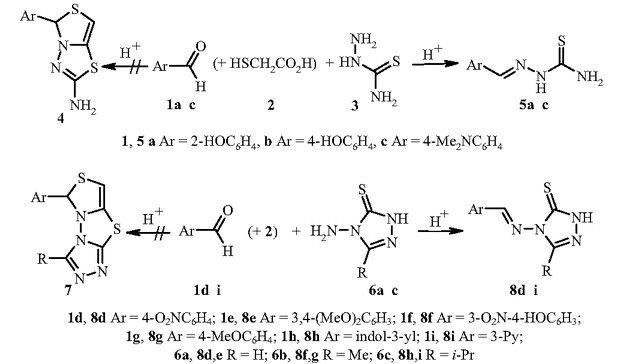
«One-pot, Three-component Synthesis of [1,3]thiazolo[4,3-b][1,3,4]thiadiazoles: Correct Structure of the Products»

Chem. Heterocycl. Compd., 2014, 49, 1458-1463

DOI: 10.1007/s10593-014-1396-4


The products of the one-pot, three-component synthesis of [1,3]thiazolo-[4,3-b][1, 3, 4]thiadiazoles from aromatic aldehydes, thioglycolic acid, and compounds containing a C(=S)–N–NH2 fragment (thiosemicarbazide or 4-amino-2,4-dihydro-3H-1,2,4-triazole-3-thiones) are not condensed hetero-cycles (as reported by several researchers), but are thiosemicarbazones or triazolylimines of the aldehydes used.

06.03.2014 Announcing seminars on March 13th and 20th, 2014

Within the multidisciplinary seminars conducted by our Center, on March 13th and 20th there will be a lecture by Professor Miklos Gratzl of the Case Western Reserve University, USA, united by a common theme «Experimental approaches to study cellular and multicellular drug transport in cancer cells».

In this sequence of talks mechanisms of drug transport at single cells and in 3D multicellular constructs will be briefly reviewed. Experimental approaches to study some of these processes will then be presented in more detail. At the cellular level, drug delivery into single cells via passive and forced uptake and associated processes will be discussed. At the multicellular level, drug penetration, modulation of therapeutic efficacy by local hypoxia and acidification, and distribution of cell kill will be outlined based on the spheroid model, the microfluidic approach, and a new physical model of the capillary microenvironment. Movement of a classical small drug molecule and a plant‐ derived viral nano‐delivery vehicle will be discussed in these contexts.

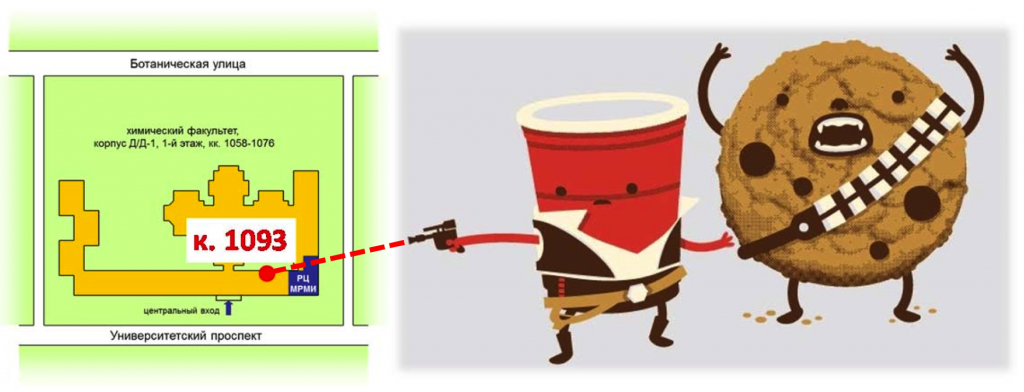
Seminars will take place at 12:00 in room 1093 of the Chemical Faculty. There will be some tea, coffee and cookies. The lectures will be in English.

cookies

10.02.2014 A scientific talk will be held at 12.00 by professor Gerd Leuchs, the director of Max Planck Institute for science of light

A scientific talk will be held on February 10, 2014 at 12.00 in the lecture room of the Center for Optical and Laser Materials Research performed by professor Gerd Leuchs, the director of «Max Planck Institute for science of light (Max-Plank institute for the science of light, Erlangen


, Germany). The topic is «Mie scattering meets interferometry at the nanoscale – Resolving the vectorial nature of light from the far‐field».   

news23

Prof. Gerd Leuchs,

Max-Plank institute for the science of light


The talk is supported by the Russian Quantum Center. RQC 

RQC

  1. 20.01.2014 Article accepted for publication in Dalton Trans.
  2. 09.01.2014 Article with participation of resource center was published
  3. 17.12.2013
  4. 09.12.2013 Gurinov Andrey has received a certificate
  5. 06.12.2013 International Committee on Science Policy

Page 22 of 39

  • 17
  • 18
  • 19
  • 20
  • 21
  • 22
  • 23
  • 24
  • 25
  • 26
© 2025 Research Park, St Petersburg University
Support: esrc-support@spbu.ru