


02.02.17 Начата работа по проекту "Исследование особенностей антипрививочного движения по данным социальных медиа". Метод исследования - сбор и анализ контента из групп социальной сети «ВКонтакте». Научный руководитель проекта Виктория Ивановна Дудина, доцент кафедры прикладной и отраслевой социологии.
Journal of Non-Crystalline Solids 457 (2017) 164–168
D.V. Pan'kin, М.V. Sukhanov, Yu.S. Tver'yanovich, М.F. Churbanov
«Investigation of structure of GeS1.35 glasses with the use of isotopically enriched germanium and Raman scattering spectroscopy»
Journal of Non-Crystalline Solids 457 (2017) 164–168
DOI: 10.1016/j.jnoncrysol.2016.11.038
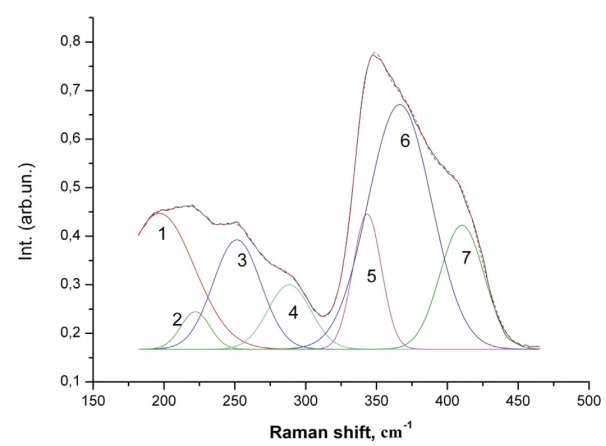
The samples of GeS1.35 glasses were synthesized with germanium and sulfur of natural isotopic composition and with isotopically enriched germanium (72Ge, 74Ge, 76Ge). The glasses were investigated by the method of Raman scattering spectroscopy (RSS). It was shown that GeS4/2 tetrahedrons and structural units containing Ge\\Ge homobonds are present in glasses. The quantum-mechanical calculation of the frequency of fundamental vibrational modes in glass network was carried out. Their dependencies on the atomic mass of germanium were used for identification of bands in RS (Raman scattering) spectra.
01.02.17 Поздравляем Марселя Туракаева с успешной защитой диссертации на соискание ученой степени кандидат социологических наук. Зашита состоялась 31 января 2017 года. Тема диссертации «Социокультурные факторы воспроизводства мобильной трудовой занятости в Российском регионе (на примере Северо-Востока республики Башкортостан)».
Inorganica Chimica Acta Volume 455, Part 1, 30 January 2017, Pages 9–14
Dmitrii S. Bolotin, Mikhail V. Il’in, Ilya E. Kolesnikov, Vitaliy V. Suslonov, Yuri Novozhilov, Oksana Ronzhina, Mikhail Krasavin, Vadim P. Boyarskiy, Renier Koen, Andreas Roodt
Fluorescent (pyrazolyl acetoxime)ZnII complexes: synthetic, structural, and photophysical studies
Inorganica Chimica Acta Volume 455, Part 1, 30 January 2017, Pages 9–14
DOI: 10.1016/j.ica.2016.10.008
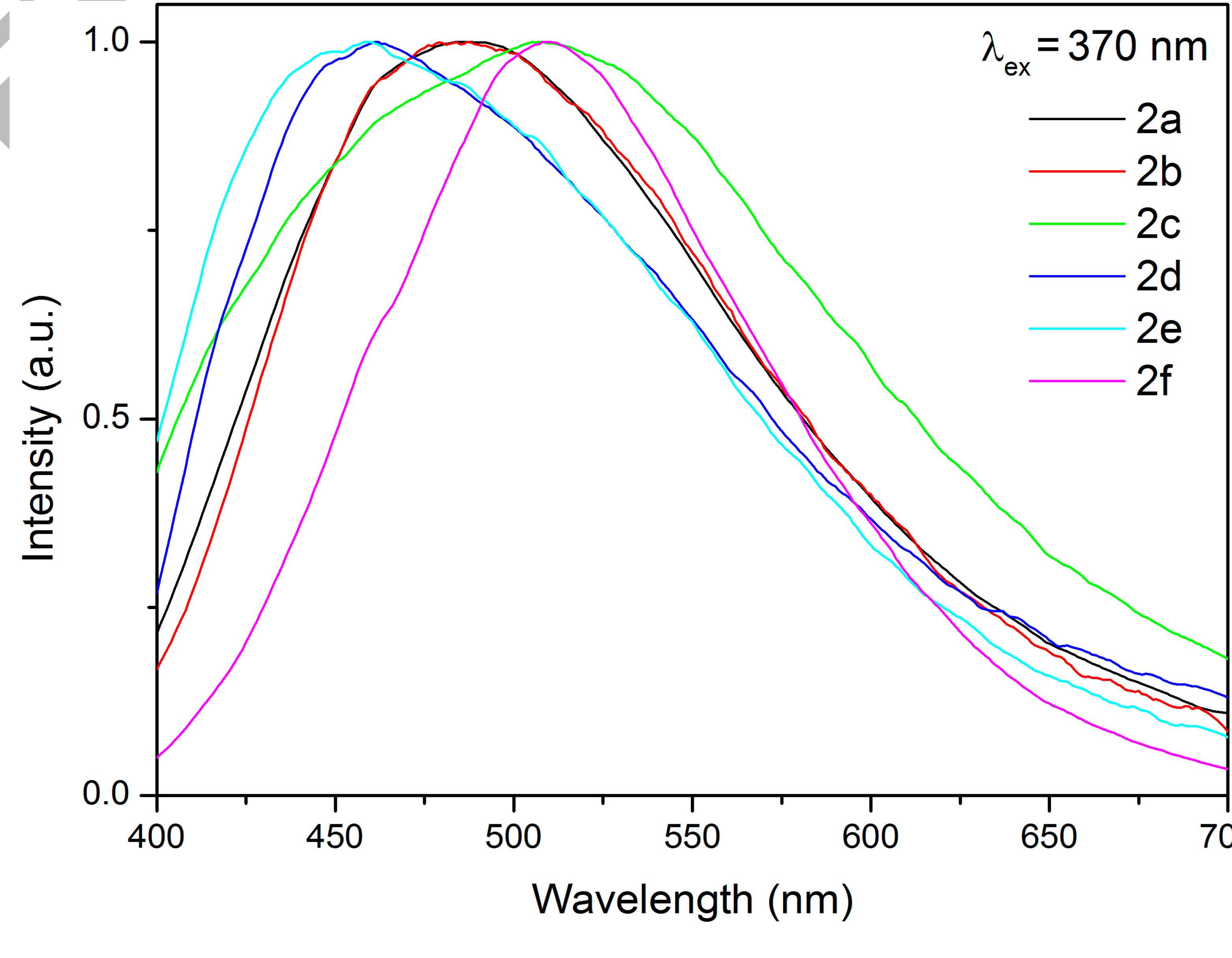
Treatment of pyrazolyl acetoximes p-RC6H4{CN(H)NCCH}CH2C(Me)=NOH (R = OMe, H, F, Cl, CN, NO2) with 1 equiv of ZnCl2 leads to the complexes [ZnCl2(p-RC6H4{CN(H)NCCH}CH2C(Me)=NOH)] (81–91%). These species exhibit fluorescence at room temperature with emission maxima in the region 460–509 nm and biexponential relaxation with τ1 = 4.63–8.64 ns and τ2 = 0.482–0.955 ns, respectively. The zinc complexes were characterized by elemental analyses (C, H, N), HRESI-MS, FTIR, 1H and 13C{1H} NMR, and CP-MAS TOSS 13C{1H} NMR. In addition, two zinc complexes and one pyrazolyl acetoxime were studied by single-crystal X-ray diffraction.
Семинары от Техноинфо в феврале
Современные аналитические методы в клеточной и структурной биологии
14 февраля. 11:00
Современные аналитические методы в материаловедении
15 февраля. 11:00
Передовые технологические методы создания материалов
15 февраля. 14:30

